ABSTRACT
Aim
We aimed to investigate if the incidence of type 1 diabetes increased in children during the SARS-CoV-2 pandemic and whether SARS-CoV-2 antibodies were more frequently present at diagnosis compared with healthy individuals. We also examined whether clinical characteristics and coexisting autoimmunity differed between SARS-CoV-2 antibody positive and negative individuals.
Methods
This retrospective, longitudinal observational study included children aged 0–17 years diagnosed with type 1 diabetes between 01 January 2018 and 31 December 2023 at Skåne University Hospital, Sweden. Blood samples were analysed for SARS-CoV-2 antibodies and islet autoantibodies and compared to analyses of healthy children from the same period. Clinical characteristics and thyroid autoimmunity at onset were collected from medical records.
Results
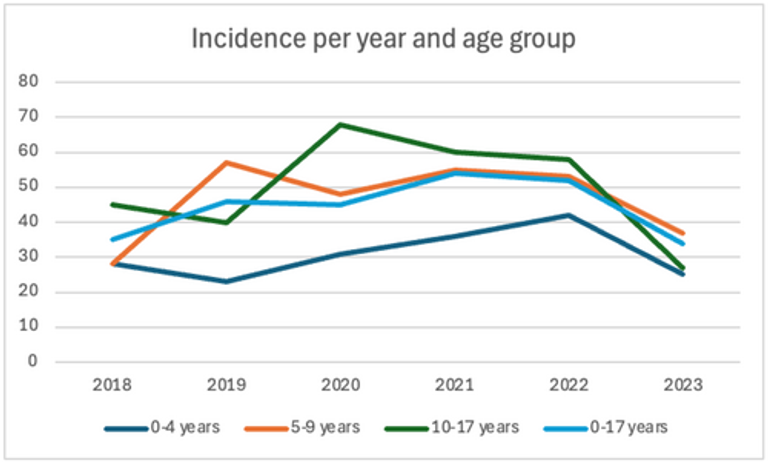
The incidence of type 1 diabetes increased from 40/100.000 (pre-pandemic) to 53/100.000 (pandemic). Children diagnosed with type 1 diabetes more likely tested positive for SARS-CoV-2 nucleocapsid protein (NCP) antibodies compared to healthy children. The SARS-CoV-2-NCP positive group had a higher prevalence of thyroid autoimmunity compared to the SARS-CoV-2-NCP negative group.
Conclusion
The incidence of type 1 diabetes increased during the SARS-CoV-2 pandemic, with a possible connection to COVID-19. Interestingly, children positive for SARS-CoV-2 antibodies at type 1 diabetes diagnosis had a higher likelihood of thyroid autoimmunity compared to children negative for SARS-CoV-2 antibodies.