ABSTRACT
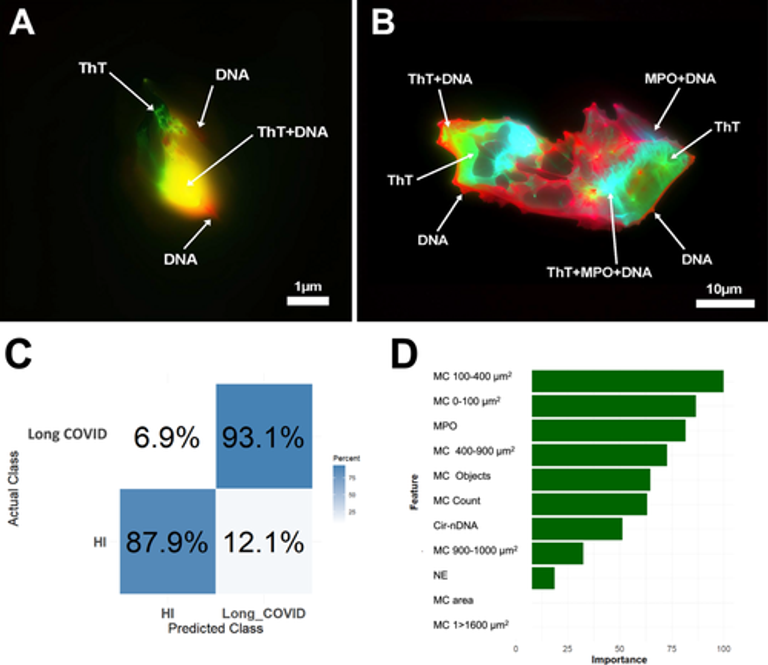
The persistence of vasculo-thrombotic complications has been put forward as a possible contributing factor in the Long COVID (LC) syndrome. Given the recently reported separate demonstration of the association of LC with elevated levels of heterogenous fibrin(ogen) amyloidogenic particles (microclots) and with those neutrophil extracellular traps (NETs), markers that are linked to thromboinflammation, this study considers the association of microclots with NETs. The results show that NETs markers (Myeloperoxydase, Neutrophil Elastase, and circulating DNA) are quantitatively and structurally associated with the size and number of microclots in patients with LC. These markers showed a strong diagnostic performance, both independently and when combined. Our study revealed that NETs may be a component of circulating microclots. We suggest that higher NETs formation might promote the stabilization of microclots in the circulation, potentially leading to deleterious effects which contribute causally to the LC syndrome.